Friday, May 8, 2015

VDH Timeline Part Five

VDH Timeline Part Five

Luis and I were talking the other day and he brought up that VDH had been going for more than a decade now a thought it might be nice to share some of the highlights for all the new double hose divers out there who have not been around since day one. My plan is to cover a few things at a time and post them on the message forum so those with a better memory than mine can share some insight and give some other interesting bits of information.


While I was typing this up I kept hearing Don’t Come Easy by Ringo in my head for some weird reason…

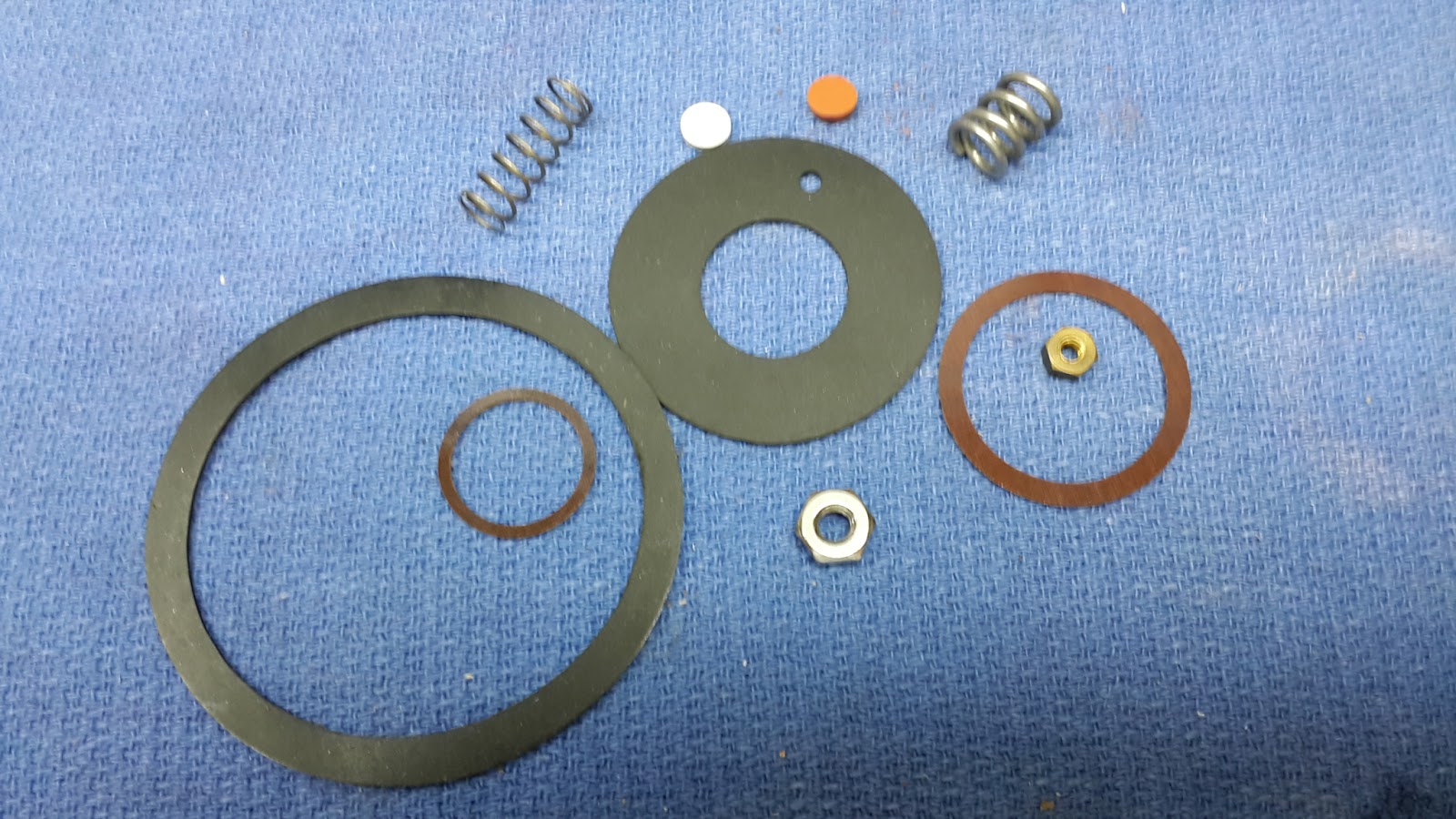
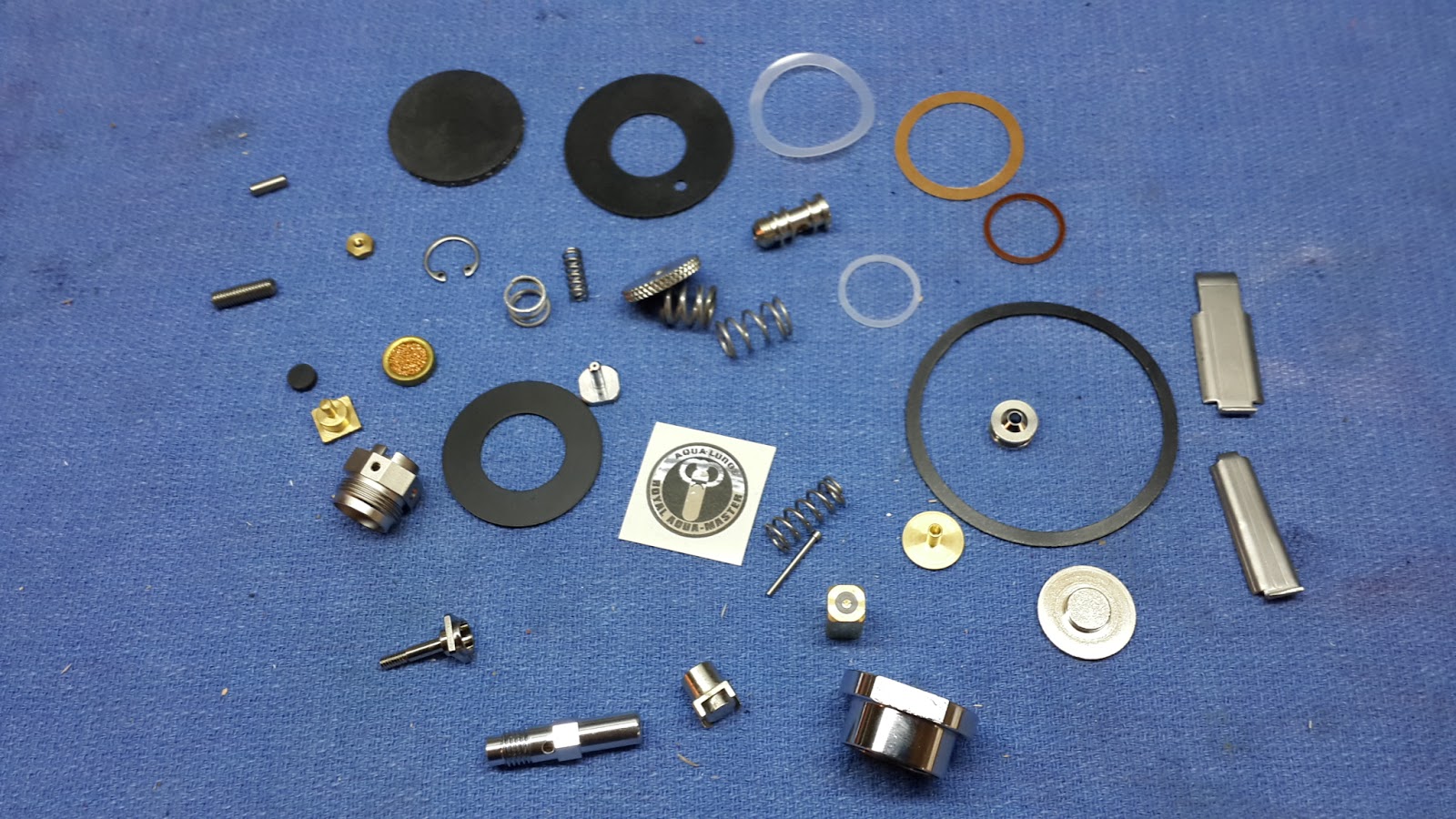
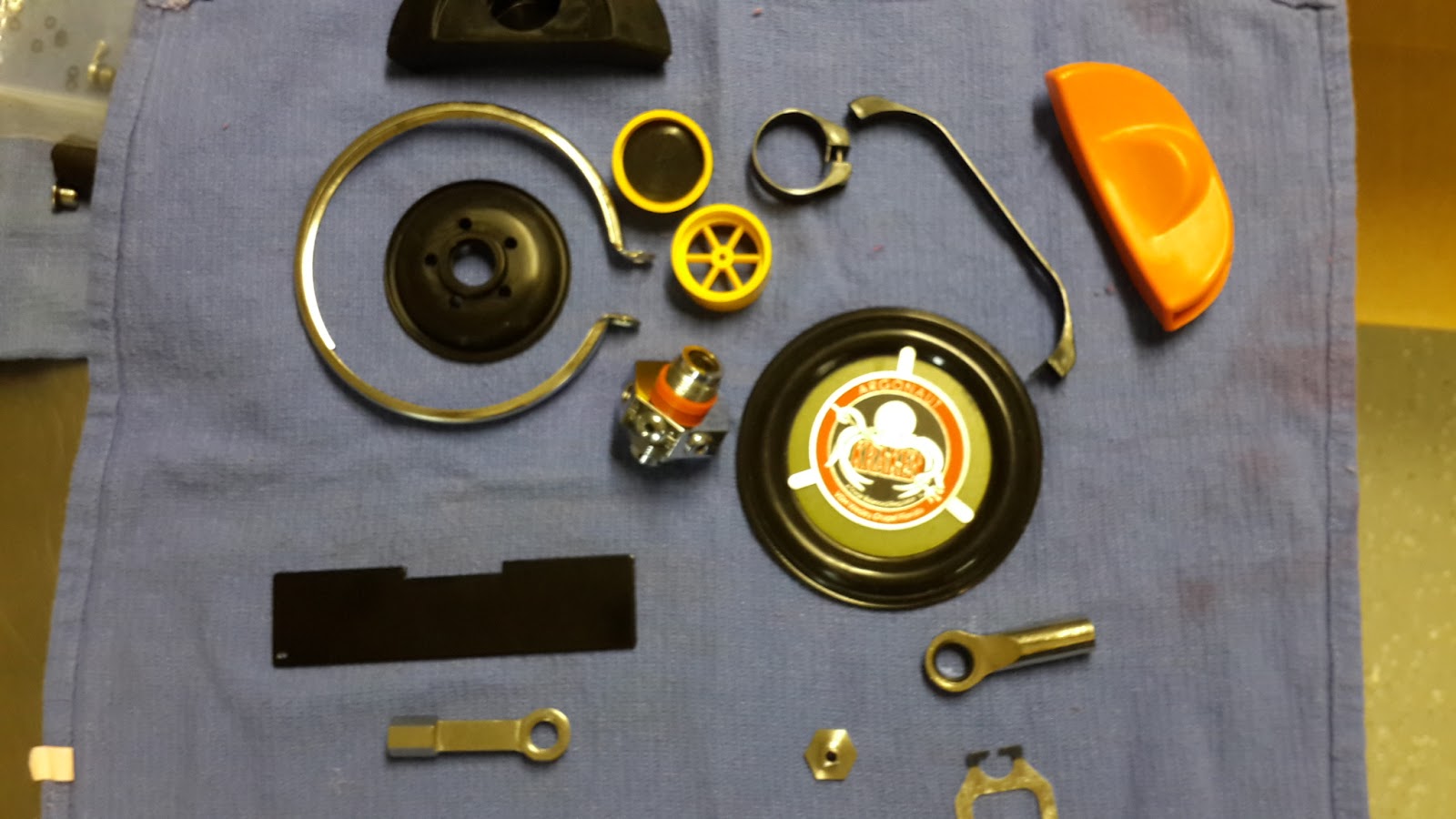
What you see spread before you in the pictures below are parts that 10 years ago were not available new and most not available at all.  If you could find NOS parts they were usually sky high and the NEW part of NOS was often questionable.
For example, NOS main diaphragms were sky high and even if they were kept in pristine conditions they were still no better than the original materials they were manufactured from.
If you want to see the only new parts that were available a decade ago,pay a visit to Dan at Vintage Scuba Supply’s store and you can see what 2005 had to offer for the double hose diver. This is not a knock on VSS, Dan is a well known collector and historian and takes a different approach to his business than I do.
And there are still are people out there who scream….Leave the old stuff alone! We like our regulators to breathe like crap...That’s how it’s supposed to be, you are ruining the originality of them…..You kids get off my lawn!!
20150428_133545.jpg
By far the most difficult small part to get right were the high pressure seats. I won’t bore you with how they are actually manufactured but building a rig to test their longevity was a huge undertaking.  
I started by putting four identical 72cf cylinder with matching valves side by side and then held them in place on a board with pipe hanger straps. Then I took 4 DA 1st stages with the new seats in them with the pin and mushroom supports all facing up and as perfectly aligned as I could get them. Next I took a dowel rod and put round head nylon bolts through it so they were sticking down like lobes on a camshaft and I aligned each bolt head directly over the mushroom pin support. It took a lot of time to get it all in place properly and finally I attached a small motor to a gear reduction drive that I got from a device used to pull up theater curtains very slowly.
Finally I connected it to the dowel rod with a Lovejoy connector and let it rip...The dowel rod turned and the nylon nuts pressed down on the pin supports unseating the high pressure seats cycling the first stages. I did this for days….If I was home, the rig was running. Periodically I had to adjust the length of the nuts so they would keep an even pressure on all 4 valves or some would actuate and some would not. Did I mention this went on for days?  Well it did!  
The sounds were similar to steam valves opening and closing and after a while I had to put on hearing protection cause it was driving me insane…….But in the end it worked pretty well and I’ve been really happy with all three HP seats I've reproduced and the Quick Set tool I now use would have tested the seats durability much easier than the Rube Goldberg contraption I built.
20150428_133601.jpg
Another challenge was and still is sometimes are tolerances. Parts for original regulator varied a bit. Sometimes a little, sometimes a lot.  I ran into this the first time when I had the brass and bronze first stage filters done.  When I tried the new filters in first stages they fit fine in some and in others not so much. I realized the tolerance when manufactured was on the high side of the samples I used and I should have backed off a bit on the +/-.  Quite a few customers had to sand down the outer edge to get them to fit properly.  They were also very expensive to make so after I ran out I decided that it was one part that I could skip. Modern filters and backup washers work just fine and unless you are at a concours regulator show no one is the wiser.
Another addition to the recycling bin were the first run of HPR 2nd stage levers. The bend angle is critical and the drawings were very clear and explicit but the angle was still slightly off on the majority of finished levers. Now the easy approach would have been to simply flatten and correctly bend them again myself. But after trying a few this way it left marks where I had flattened them and I couldn’t stand the thought of a part that looked so nice and shiny with marks on it….So I scrapped the whole batch and today I still bend each lever one at a time in the jig Herman made for me.

A big issue is fielding E-mails like this…...Could you make XYZ part?  If you did make it I would buy one...The operative word here is ONE. Unfortunately I don’t have the skills, tools or machinery to turn out one of any part and no manufacturing company is going to take an order for ONE part unless it’s accompanied by a check with a lot of zeros in it.
There are several other companies that produced double hose regulators aside from USD and Voit but as of now no one has really picked up the ball and offered a large selection of parts and support for them.
Take the Healthways regulators as an example….Made in the thousands and easy to come by. Rugged single stage design and can be a good breathing regulator with minimal effort. The achilles heel is the exhaust design. The majority of them were made with a weird two piece exhaust in an effort to keep the Aqua Lung lawyers at bay over the duckbill exhaust design.
Over the years I have come up with several ideas that would work and even had reproducing the original parts sourced for them but no matter how sharp my pencil was I could never get the dollars and cents to line up with the cost of making them.

Sand Dog is next weekend May 15th to 17th so I’ll blog about that for a week or so afterwards and try to finish up the saga of getting the hoses and mouthpieces made. It reads more like a comedy of errors that a success story….

Monday, April 27, 2015

Vintage Double Hose Timeline....Part Four

Luis and I were talking the other day and he brought up that VDH had been going for more than a decade now a thought it might be nice to share some of the highlights for all the new double hose divers out there who have not been around since day one. My plan is to cover a few things at a time and post them on the message forum so those with a better memory than mine can share some insight and give some other interesting bits of information.

I wrote pretty extensively about The Phoenix First Stage earlier in the blog so to save time you can click on the link and I’ll try and share some of the behind the scenes stuff as best I can remember.
Before I go any further let me cover this…. I met Luis at a Vintage Scuba Supply even at Lake Wazee Wisconsin in 2005. For those who don’t know him personally let me share a little as he is way too modest to ever do so.
In my mind I envision that Luis looks at things and sees them kinda like The Terminator in the first movie. Everything his eyes see are in three dimensions with materials specifications, functionability, feasibility, options, assembly procedures, structural drawings, failure point and all sorts of math equations running like a ticker at the bottom of his field of vision…….When Luis talks to you about certain subjects I’m sure he has to dumb it down a bit so the rest of us can keep up.
All the while he is one of the nicest and most thoughtful people you will ever meet. It has been my distinct pleasure of working with him for a decade now and even though we try each others patience from time to time we have always been friends first.

Setting around a campfire one night at Lake Wazee, Luis starts talking about how he can modify a first stage similar to a Conshelf and get it to work on a two stage USD or Voit regulator.  I am very intrigued by the idea as it would skip the banjo fitting and allow use of modern attachments to the double hose that everyone was clamoring for…...Not always because we wanted to use them but since the big upsweep of divers using a double hose again there was a lot of pushback from resorts and dive boat operators about using “That Old Junk” to dive with.  Well Luis set out to conquer that and ended up doing it in spades.

A few months and a million phone calls and E-mails later he had come up with a rudimentary first stage with high pressure ports. At this point he only concerned himself with the ability to use all the ancillary parts that were on the shelf at Aqua Lung that we could implement right away. It saved on design time and materials cost and most of all it used proven parts that were industry standards and were reliable to a fault.  Clear through the Argonaut he has stuck to this idea and you will find most parts I produce are compatible with 90% of the original regulators.
He refined it a bit and figured out how to add low pressure ports and had a couple made up in a machine shop local to him.  Testing was easy…..It worked flawlessly and when coupled with the new silicone diaphragm made a regulator that breathed exceptionally well.

I started looking for a machine shop that would make a few production first stages….At this point it had no name, it was just the thing we were working on…….
As I earlier referenced, NEVER tell a manufacturer you are building SCUBA gear…...I provided drawings and asked only that they be built to plans and that was it.
Now came the hard part……. I had the $$$ for tooling and brass but could not cover the cost of doing enough first stages to use up the minimum quantity of brass I had to buy.…..So I went to a couple friends that I knew could keep the project on the QT and with hat in hand told them Luis and I had prototypes that worked fantastic but we needed to make a few more just to be sure they were as good as we thought. Asked if they could front me a little cash in return for one of the new first stages and then give us some honest feedback on them. All of them said, “ Hell Yes we want in”

Every project started at VDH has been with My Capitol FIrst. I have never asked friends or customers  to front me cash for an unproven and untested idea that may or not fly. If I don’t have a working and tested product that I can backup 110% I won’t ask you to buy into it.…

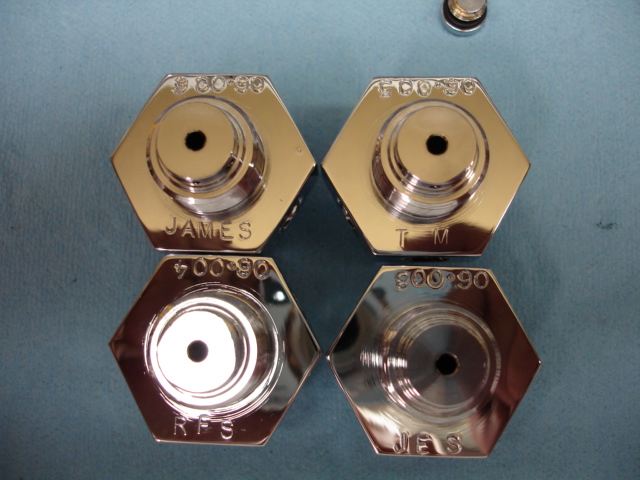
I got the samples built in naval brass and then turned them over to a friend outside of Chicago that ran a chrome plating business for motorcycle parts that I had known for years and I trusted would get them done right. At this point I felt like I was working with Faberge Eggs! Later he got shut down by the EPA for dumping stuff down the drains that he shouldn’t have :(

At the same time I was working with my main source to acquire all the parts from Aqua Lung for the internals of the new first stage. There was no way come hell or high water that they would have sold me anything directly….And if not for my source….You know who you are….This new project would have never gotten off the ground like it did.

I hope I get this part right…..The first finished parts went to, Rob, Ryan, Tom, James, and Joe…..Please someone E-mail me if I'm wrong on this.
20150424_082731.jpg

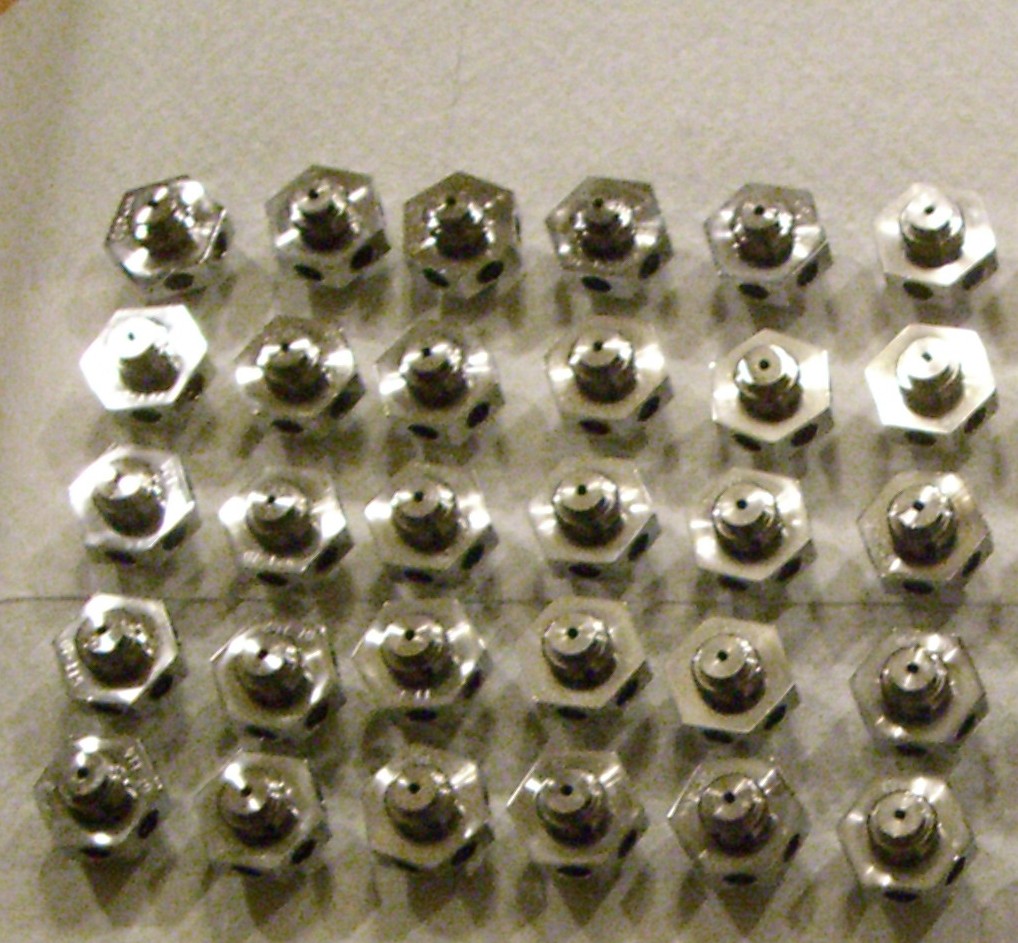
The results of testing on the first few went just like Luis and I thought it would and I geared up to make the first run of 50 first stages….Out of this we also came up with the idea to use nylon washers for the high pressure sealing area as you could stack a couple of them and torque the first stage into place in various ways so the ports would align where you wanted them to ….You guys refer to it as Clocking….
DSC01427.JPG
Phoenix nozzles.jpg

The Achilles heel in the whole plan was being reliant on inventory at Aqua Lung specifically yokes and screws.

The name Phoenix was one of a few we were thinking of using….Spider was another one since it kinda looked like one when you hooked up all the hoses to it but in the end I decided on Phoenix since it was helping the double hose rise from the ashes.
Side Note:  Luis cares nothing or very little as far as names, colors, advertising, promotion, graphics, packaging, distribution etc…..It could be called X and come in a used milk carton and as long as it was to his specifications and performed as he designed it everything else is just fluff. Most of the time he prefers not to be bothered with this stuff and leaves it up to me. BUT, he is always very cognizant of how it performs in the field and takes great pains to analyze feedback and information we get from other divers.  

After the first run of 50 Phoenix first stages Luis made a revision and was able to shorten the height a bit and improve clearance. At the same time he did some changes to improve airflow through it. Info Covered in THIS Blog Post

At one point I had dozens sold and NO YOKES OR SCREWS to send them out with…..For those who don’t know me I can assure you that this causes me an immense amount of panic and stress.  I HATE…..HATE…..having an order from a customer and not being able to deliver it right away but I was at the mercy of AL and you can’t get what they don’t have…..
Bernie Campoli and several other friends came to my rescue once again and went to their dive lockers and shops and dug up all the new and used Conshelf yokes they could find and sent them to me with the understanding that I would send the loaners back once I got resupplied with the new ones.  Their hard work and friendship allowed me to get out an entire run of Phoenix first stages that would have otherwise been delayed for two months!!!
My friends and customers have been vital in building the double hose community and I will forever be in their debt.
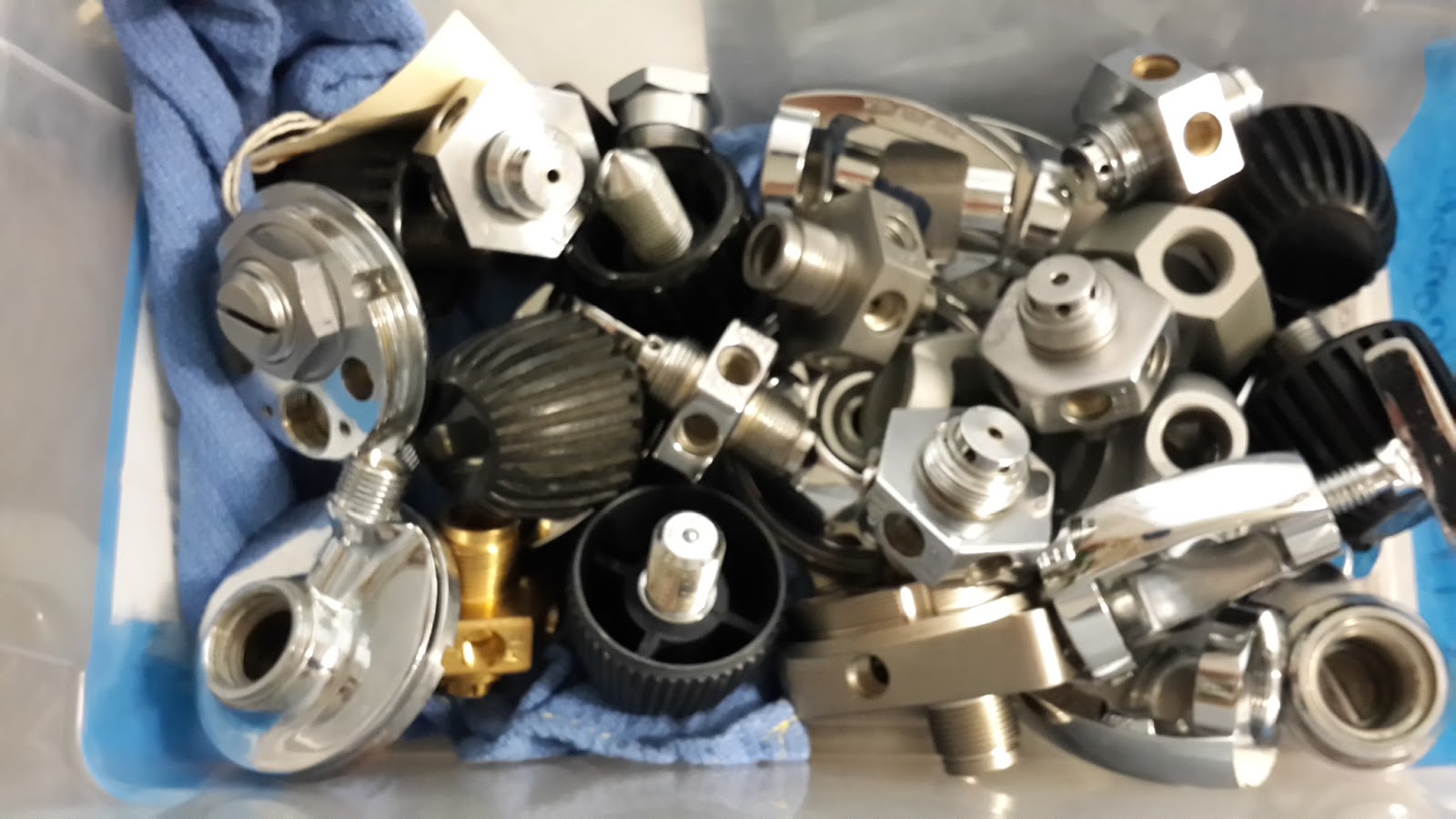
Since 2006 I have changed machine shops and plating companies several times. Not by choice by due to economic shifts and changes in attitudes. Several of the shops I worked with were small and luckily for them they grew and the business of making 50 parts at time became no longer feasible or if it was, they were charging me a much higher price for their service. With these changes have been many failures in production and quality control. The picture below is what I like to call my BOX OF FAIL…...and my recycling bin is much larger !
20150424_082800.jpg

When the Argonaut came out last year I had decided to stop producing the Phoenix first stage as I thought the volume would not equal the capitol I had to tie up producing them.
Boy was I wrong….I’m used to getting hate mail, it comes with the territory but the outrage from the community made me feel like Frankenstein in the village….I could feel the flames of the torches through the computer.
With over 500 Phoenix's out in the diving world it has taken on it’s own cult following. There are even divers with Argonauts that still cling to their Phoenix like Linus does his blanket.

There is no need to change the Phoenix nor does it need to evolve. It stands solidly on it’s own.  I predict that someday it will be revered in the same light as the Conshelf or Scubapro MK5 with the same adamant supporters still in use decades after it was introduced.

Friday, April 24, 2015

Rubber Dub Dub.......VDH Timeline Page Three

VDH Timeline Part Three

Luis and I were talking the other day and he brought up that VDH had been going for more than a decade now a thought it might be nice to share some of the highlights for all the new double hose divers out there who have not been around since day one. My plan is to cover a few things at a time and post them on the message forum so those with a better memory than mine can share some insight and give some other interesting bits of information.


As with many projects we start this one started to snowball and the momentum it was gaining gave me confidence that I should pursue other items for the double hosers.
I had started rebuilding quite a few regulators but was EXTREMELY frustrated with the final product because so much was lacking in what I could do with the right parts.
Regulators were rebuilt with new parts inside but the ancillary parts were still original. Main diaphragms were 50 years old and the rubber had lost most of it’s flexibility. Mouthpiece valves were about the same or had been replaced with pieces of inner tube screwed into the wagon wheels. Duckbills were available as replacement parts SOMETIMES…..I didn’t and still don't like to be at the mercy of someone else when working on something.  I was turning out regulators that were like V8’s with two plug wires missing.  They worked much better than they did before service but still were way below their potential.
First things I tackled were Duckbills and Mouthpiece valves…...Little did I know there was a HUGE learning curve when making parts from rubber….I was still trying to duplicate the original and not thinking forward to improving what was there.
In my ignorance I made some pencil drawings of mouthpiece valves and provided dimensions as best I could and started asking for quotes from suppliers I could find through Thomas Registry.
This turned into a whole other nightmare of questions I was not smart enough to answer...What durometer do you want?  What is the shrinkage factor? What is acceptable sidewall deflection etc etc…...Engineers like Luis answer stuff like this in their sleep but I had NO CLUE what to tell the manufactures.
So I gathered up a few of the very best valves I could get my hands on and sent them to people that offered to bid….Once again I learned you can’t just send in a part and say “Make it just like this or better”  …..The ones that would use the samples charged a large fee to Reverse Engineer the valves before quoting….I finally bit the bullet and paid a company to dissect the mouthpiece valves and reproduce them. And as it turned out I got a reproduction of the same flat valve that had been used for 50 years and along with it, the same failures as they had….They deformed easily, didn’t last that long and the sealing was marginal. BUT they were new and fit the wagon wheels correctly and were much better than crusty old valves.

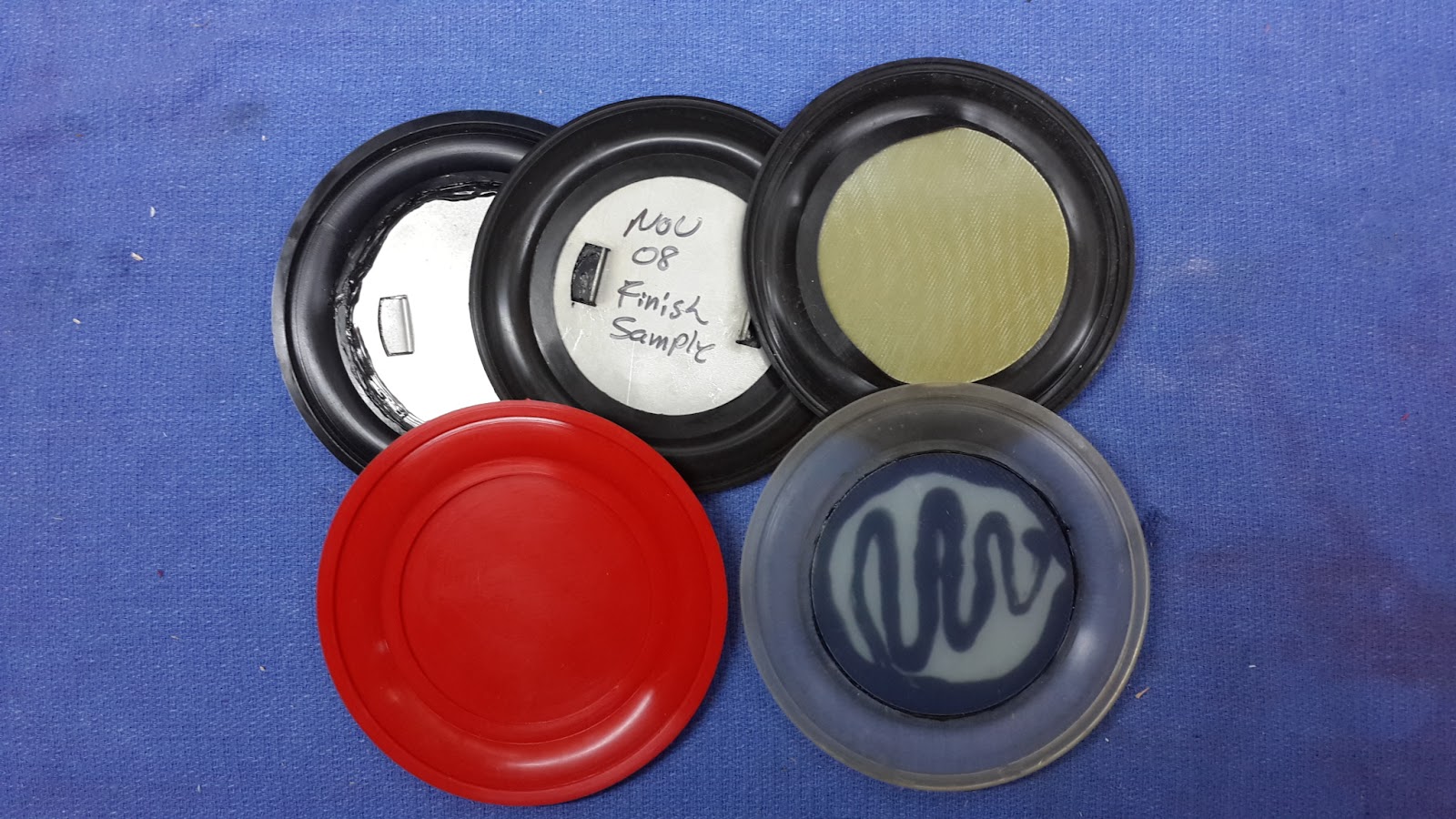
Duckbills…. At the same time I had contracted with a company who build rubber molding for the auto industry outside of Detroit to reproduce them. They were using a dip process similar to making a wax candle. The finished product was more flexible and much better that the crusty old ones but the finished product was plagued with inconsistency. More than a third of them were too thick OR thin in places and could not be used or sold. I confronted the company about it and was told, the waste percentage was acceptable in their opinion and if I didn’t like it, I could take my business elsewhere and they were tired of listening to my complaints…...I was basically screwed as I had already paid a small fortune for the form used to make them and was out of $$$ to go anything else.
The ones that were ok worked fine and I had NEW duckbills to put in customers regulators.

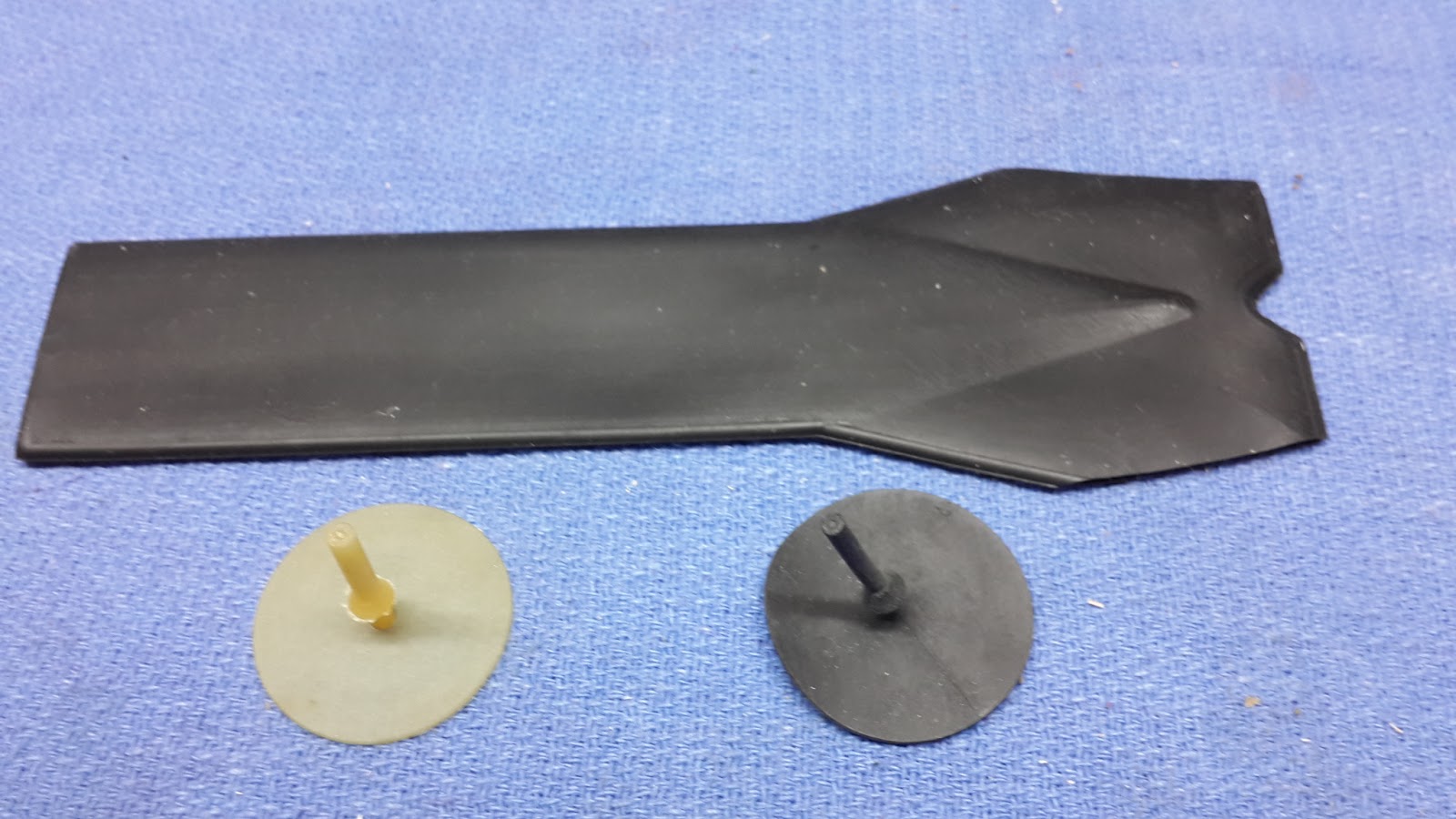
Duckbill in the picture is a new one..I don’t have an example of one of my first efforts. The black valve is one of my first and the clear one is an example of my first silicone valve.
20150423_084337.jpg

Main Diaphragm…… I can’t take credit for the initial legwork on these as Ryan Spence from Flashback Scuba had given me a couple of examples he had made from clear Silicone and some contacts with a company willing to build them….Thank you Ryan!
Note: Never tell a manufacture that you are building parts for SCUBA or life support equipment as 99% of them will run like you poured boiling oil on them…..
My venture with the company he suggested bore fruit right from the start...They did indeed make the silicone section of the diaphragm but the challenge was correcting the outer edge of them. All the examples I had were USED and had been compressed in cans for 50 plus years and when the drawing was made it reflected this…...Unfortunately I had already paid 5k for the mold and the revisions to get it right cost me half again as much.
Second issue was getting the center discs made….A supplier for the stainless disc was no problem but finding someone who still had BROWN phenolic material to duplicate the single stage diaphragms was impossible…..I was listening to too many “Experts” in the double hose world telling me that if the parts were not exactly like the originals that no one would buy them….
My vendor had sheet after sheet of phenolic material but it was yellow...I finally bit the bullet and had them made and hoped that they were accepted by the end user.
The sample diaphragms were fantastic and you could easily measure the benefit in lowering the work of breathing with a magnehelic. I was ecstatic to say the least!  Once they produced the first 200 diaphragm discs I had to use adhesive to attach the center disc in each one of them and then put a weight on top to hold it in place for 48 hours.  So my house had folding tables setup all around and smelled like solvent for weeks while I let the adhesive for the center disc cure.
20150423_084638.jpg
Three more revisions to the reproduction diaphragm have been made since the beginning and each has improved regulator performance...The above shows various samples and revisions.

Wednesday, April 22, 2015

Hookah Me up with a Banjo...My Timeline Page Two

VDH Timeline Page Two

Luis and I were talking the other day and he brought up that VDH had been going for more than a decade now a thought it might be nice to share some of the highlights for all the new double hose divers out there who have not been around since day one. My plan is to cover a few things at a time and post them on the message forum so those with a better memory than mine can share some insight and give some other interesting bits of information.


When the DA Aqua-Master was introduced it had a fitting on the main body that allowed it to be attached to a hookah unit or surface supplied air. There was even a kit from USD for converting your existing DA to this type of unit called The Hookah Master  I still reproduce the plug and Alan makes the harness so diving this way is still an option!
Side Note: The Navy never asked for a hookah port and from period information saw no benefit from having it on the regulator.
Divers quickly figured out ways on their own to adapt the hookah port to allow access to low pressure air. In the early days it was often used to maintain ambient pressure in camera housings. (see Basic Scuba for more info) and later for BCD, Drysuit and Octopus 2nd stages.  The fitting on the back of the DA (and Royal) is an Oxygen "B" which is not normally used with SCUBA equipment and I don't really know why they chose it to begin with.
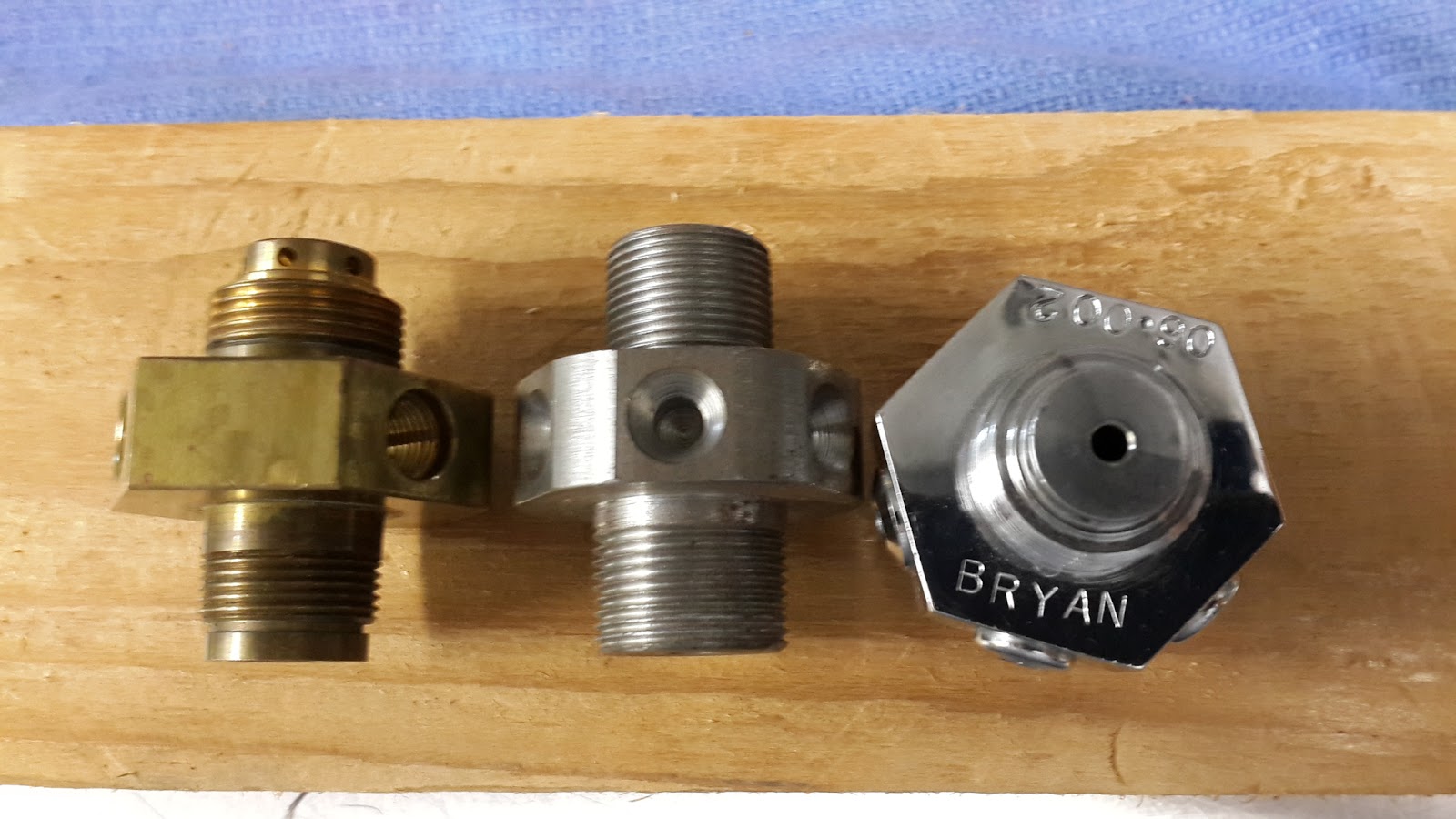
When double hose diving started gaining popularity again a demand from the community to produce this type fitting began to emerge. 2004 if I remember correctly someone gave Chuck one of the brass fittings in the picture below. It was made by Amazon Hose (I have a copy of the invoice) and I decided to have a couple of dozen made and try and sell them with a couple of other parts I was working on for the double hose community. At this time I had no website and was selling things by word of mouth and on the message forum at Vintage Scuba Supply.

The hookah port adaptors were an immediate success and divers were adding three way swivels to them and running all kinds of stuff from their two stage double hoses. I parlayed the minimal profit from them and started working on other items the community was begging for but no one was making. 
Things were going along well and I even had time to put up a rudimentary website to sell the few items I had managed to source or reproduce. I was even lucky enough to acquire my first mentally unstable customer who's delusion of grandeur propelled him to threaten me with everything from lawsuits to incarceration for stealing his ideas and for almost killing him with parts I sold him but that he never actually used....Never a dull moment.
Next a diver on Vintage Scuba Supply came up with the idea to take a nut and machine it to an Oxygen "B" fitting on one side and on the backside to accept a 3/8" o-ring hose which is standard for low pressure scuba.
Great idea as it shortened the fitting and eliminated the threaded section of the brass one. Everything would have worked out great and I would have been happy to host his idea on my site and support his effort as I was doing for others in the community already.  The problem was, in his very first post about the new fitting to the public he claimed that my brass hookah port adaptor was poorly made and less than desirable (Yes I kept the post) As negative advertising often does this one backfired immediately. There was nothing wrong with the brass fitting. As simple as it was it worked just fine and I was never aware of any problems whatsoever with them.
After consulting with an attorney on the subject and finding out out you can't patent industry standard fittings (why you can't is much more complicated), I contacted my local supplier and had hundreds of nuts machined and gave them away for the price of postage. Yes it cost me $$$ and in hindsight I wish it would not have gone down that way but it was the principal of the whole thing. 
Almost a decade later it remains unchanged and I have no plans on revising it. Over the years I have even purchased regulators that still had BOTH types of adaptor ideas on the hookah port from the early days.  One was from the famed underwater photographer Stan Waterman who supposedly used it to hookup his drysuit while filming under the arctic ice. 

Dueling Banjos!


Banjo fittings allow you to use a pressure gauge with your double hose providing the regulator has a long yoke on it which allows enough clearance between the valve and the first stage to sandwich it between them. I'm not sure what year USD put them in their catalog but suffice to say finding one a decade ago was tough and when you did find them prices ran around $100.00 for a NOS one. 
I entered into an agreement with a "Friend" at the time and supplied him with an original that I had sourced along with some cold hard cash and he had a machinist friend make some up for us out of naval brass.  My "Friend" and I agreed we would sell them at X price and as long as we kept to that price we would make about $15.00 profit on each one we sold. 
I got the word out on the banjos and all was going along well for about 24hrs when I got an E-mail from a diver overseas asking me why my "Friend" was offering the banjo fittings substantially cheaper than I was?  When confronted my "Friend" advised me that our agreement on price did not apply to sales outside the states......I think you can see where this was going......And went.....
After producing the first banjo's in brass I went on to make them in chrome plated brass like the originals and then in stainless steel. I have always had challenges finding a chrome shop that could do good quality work so your banjo may be chrome or stainless depending on the year. One is no better than the other and they do their job keeping double hose divers informed of cylinder pressure.  


In the early 50's a company called Mar Mac advertised a banjo fitting in Skin Diver that was much thinner and would work with most any regulator.  If my memory serves me correct I got an original from Sea Hunt Jerry in trade for a used Buick and a few gallons of Kemps Cow ice cream.... The original design was not so great and it was very temperamental to use.  My choice to reproduce it was simply out of desire to get a banjo fitting out to all the divers hollering for one who didn't have a long yoke on their regulator but wanted to use a pressure gauge. 


Monday, April 20, 2015

Vintage Double Hose....My timeline Page One

Luis and I were talking the other day and he brought up that VDH had been going for more than a decade now and thought it might be nice to share some of the highlights for all the new double hose divers out there who have not been around since day one.

In 2004 though the magic of the interweb I stumbled upon Vintage Scuba Supply while looking for information about a regulator I wanted to buy on E-bay  similar to one my older brother had given me as a kid.  I’m sure most of you know Dan’s site as it was the original one dedicated to vintage scuba gear.
After getting the DA Aqua-Master from E-bay I became very frustrated in the fact that there were no NEW parts available to service the regulator with.  I was basically instructed by the VSS message forum members and Dan to simply clean up the old parts and put them back in the regulator and that would be good enough.
Back in the old days when being a diving instructor was my full time job I regularly attended classes for regulator service and did this at the various stores I worked at over the years. I was very familiar with how one should and should not rebuild one and reusing  50 year old parts was not an option.  I fully understood that no new parts were available for double hose regulators  but was not willing to accept “Thats just how we do it” as the right answer.


So I took the parts I could get out of the DA I purchased and started searching contacts I had in manufacturing asking them to reproduce the part. When I could I wrote out specs and did rudimentary drawings but for some parts I simply had to mail in the only one I had, ask the company if they could make it and how much to make it and if the could not help me then could they please mail back the sample part since I did not have any spares and needed the one part they had to put the DA back together so I could go diving.


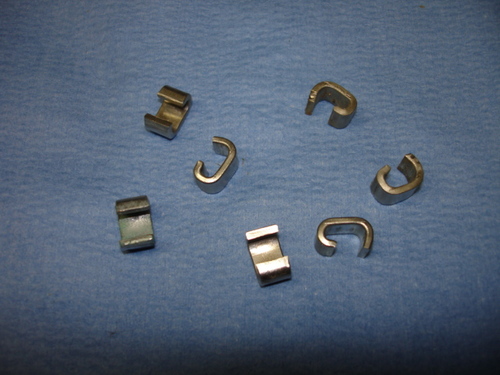
At the time there were many posts about C-clips for the cans and how there were no spares available.  If you could find someone with a stash of them they treated them as if they were gold plated and charged $5.00 each for a part everyone HATED to begin with.
So I took the 7 that came on the DA I had purchased and sent one to 7 different metal fabrication shops that I either knew or was able to source from a huge Thomas Register resource directory I had.
6 out of 7 replies were either Not Interested or Too High for me to afford since the quantity I was asking for was only 500 pieces. One of the 7 replied that they could make them and the price was right and a month or so later I had C-Clips to sell.
C clips.jpg
Since I reproduced the band clamp ring years ago C-clips have become so plentiful that I could easily sell them by the pound and unless someone is doing a period correct restoration I won’t even put them back on a regulator…..


At the same time I was lucky enough to run across a specialty sealing and gasket company up north that was fine with making small quantities but I had to pay for the dies to cut the gaskets.  The most challenging was the high pressure diaphragm as it took them a while to source the correct material for it. They did several samples from material they had on hand but none were quite right and one sample was way below the strength needed for the job and it blew apart while I was testing it..
Springs were another story altogether as nothing off the shelf or in a catalog is quite the same as the DA’s main or second stage spring that I could find.
I entered an agreement with a spring company in CA to make both springs and about 3 or 4 weeks later a whole lot of springs showed up and I was ready to go!  I put the new springs in the same DA I had been trying everything else on and the IP held fine but the 2nd stage free flowed…….So I took another new spring out and tried that…..still free flowing.  I figured I had worn out the seat and put in another of the new batch I had made up. No matter what combination of new springs and seats I used the regulator still free flowed. So I finally swapped out one of the new springs for the ORIGINAL…..And there was no more free flow…...Hmmmmmm So I got out the micrometer and started measuring and even though to the naked eye the 2nd stage spring appeared to be exactly the same, the wire size was actually smaller in diameter or gauge than the original…..
After raising hell with the spring company they finally admitted that my job was so small that they subcontracted it out to their job shop overseas and my springs were most likely made in metric wire gauge as opposed to US wire gauge !!!!!  This was not the last time projects would go in the metal recycling bin at my house.


By this time I had put together a basic service kit for a DA Aqua-Master that had all new rubber parts and correct phenolic gaskets. I had also acquired a couple more DA’s and a Navy approved and had been testing them in my garage for weeks.
I approached Dan at Vintage Scuba Supply about carrying them on his website and suggested I could put them together and sell them to him in bulk and we could both make a little coin on the deal and I sent him a few of the sample parts.  Much to my disappointment he told me he didn't think my kits were good enough for his customers.
I was livid as you can imagine and more than a little pissed off! I took some time and carefully looked over my parts comparing them to the originals and the only part I could find flaw with was the 2nd stage LP seats. They were cut from silicone rod stock and when the knife cuts them it squeezes the material and it has a slight angle to it. Nothing that affected the use of them and they seated far better and more reliably than reusing a 50 year old rubber seat.
Around the same time I started getting flack on the Vintage Scuba Supply message forum from a few that consider themselves experts in everything they talk about and some were just dumb ass keyboard divers.
Along with the chicken little crowd I met some great people who helped and supported what I was trying to do and many of them I am still friends with today.  In hindsight I’m glad I was told my first efforts were not good enough as it only cemented my resolve to do what I had set my mind to doing to begin with.
Before anyone gets any wild ideas that Dan and I are mortal enemies, nothing could be further from the truth. We have worked together many time in the past and have always remained amicable toward each other. I respect Dan for his efforts in getting the word out in the early days and for documenting much of the early history of double hose regulators that we all enjoy diving with today.

20150419_180513.jpg
Questions.....Comments......E-mail me here

Join the fun on the Vintage Double Hose Message Forum to comment and learn more.


Saturday, April 18, 2015

How much to service my double hose

One of the top three questions I get on the phone or via Email on a daily basis....

If it's a US Divers or Voit chances are your in luck. Over the past decade I have reproduced or produced almost every part necessary to get your regulator back in the water and in most cases vastly improve it's performance!

I always ask to see the regulator before giving an exact cost to rebuild it......You would think after doing hundreds of them I could get the cost down to the penny just by hearing the regulator type and I'd like to claim I'm that good but not by a long shot.  Most of these regulators are more than 50 years old and a lot can and has happened to them over the years.

When OEM parts and support ran out, divers as they do with everything got creative with keeping their double hosers running and took creative steps to do it......Over the years I have seen everything from cork gaskets to sealant alone used in place of body to can gaskets. Main diaphragms with patches, one made from sheet rubber with big washers used to retain it and even one that had stacked washers glued to it so it would contact the demand levers.

First stages are even more unusual and as I have written about in earlier blog posts, many Royal Aqua Masters have had DA Aqua Master first stages installed in them. 
Inside first stages I have seen various items used to seal up leaky high pressure seats and more than once seen attempts to cram Royal first stage parts into DA first stages...IT WON'T WORK..

Duckbills are either disintegrated into piles of mush or have turned rock hard and attached themselves to the can and inner horn more solidly than any adhesive could do it.  In place of original duckbills I have seen inner tube sections glued together, balloons, pieces of vinyl from pool toys etc.

Front cans and labels can get interesting as almost all years are interchangeable and more than once I have received a two stage regulator with a single stage front can....DA Aqua Masters with Royal Aqua Master front cans and vice verse...BUYER BEWARE. And my favorite is the belief that if it has a Crown sticker above the label it makes it a Royal Aqua Master......Not so much......

The first thing I do is take it apart and see what I have and what I don't have to work with and until then I have no real idea what it's going to take to get it going again.

Once everything gets spread out and looked over I can give you an idea of what options you have and you can decide where to go from there.
As an example, if you have already decided you want a Phoenix first stage installed then there is no need to waste time assessing the condition of the original first stage.....Same holds true if you want to upgrade your original second stage to the greatly improved HPR 2nd stage.

VDH has introduced so many new options and upgrades for double hose regulators over the past decade that it can take you a while to look over all of them and decide what is best for the type of diving you want to do.
But if you are just looking for a quick fix by re-using old parts and doing it on the cheap then I'm not the right person for the job.

Please keep in mind that at any given time there can be half a dozen regulators waiting for service, new Argonaut Krakens being assembled with parts and supplies for the DIY divers being shipped out with only Me, Myself and I to do all of it.

Click Here for more information about getting your regulator serviced.


Monday, April 13, 2015

Sport Diver Manual.....Great for Vintage Equipment Divers

I was unable to come up with detailed information about the history of the manual itself but I don't think it's of great importance to what we are doing here. I remember this manual as one we carried in the dive shops I worked at in the 70's and 80's.  When SSI started using it as their course book the NASDS store I was at stopped carrying it.

So what is so great about this manual and why do you want one.......First off it has pictures and diagrams of the important stuff which is something that dive manuals don't have today. It is non brand specific and the ideas apply across the board.

It gives you great points of reference for most things in the world of sport diving and does not require the reader to purchase additional classes or text books to read up on other facets of diving.
The manual was written in the mid 70's when you could still buy a double hose off the shelf and BC's were moving from Co2 vests to working pieces of dive gear.
For the double hose diver this is a great manual as it covers actual diving with one and how it should be done. From hose retrieval and clearing to buddy breathing it has you covered.
So often divers getting into double hose gear get caught up in the buying and collecting frenzy and forget that the mechanics of diving with one takes some acclimation. 
If you are getting into the two hoser realm or even if you are a seasoned diver this manual is a great reference point for practice and review.  Grab a copy and read it on a plane or while waiting for an appointment. Take time to review or re-familiarize yourself with the tables and dive planning before computers. You can even plan out a dive manually and then compare it to your computer afterwards. The information contained in it are foundations of good diving skills no matter what your interest is. 

I have gone to various sources and purchased the manuals which contain all the original double hose information. Later editions of the manual did not have all this information in them. Most of what I have are student or library copies so there may be some highlights on pages or a few marks but all of them are complete. They ship at book rate so shipping is cheap. I'm not making a fortune on them and my hope with having them available was to provide a reliable and easy to understand source for divers who are going or considering going double hose.