Thursday, February 19, 2015

Bonaire Day 2. Let's Go Diving!

Bonaire Day Two…….Let’s go diving

Bonaire Dive and Adventure.jpg
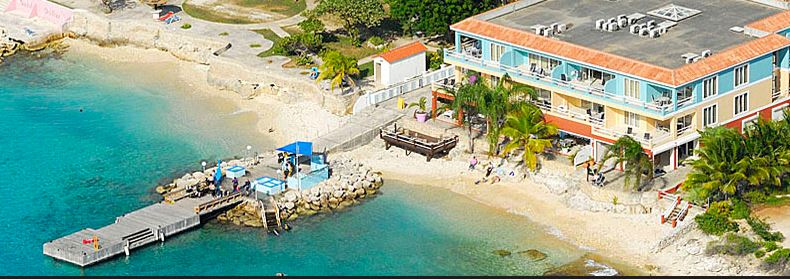
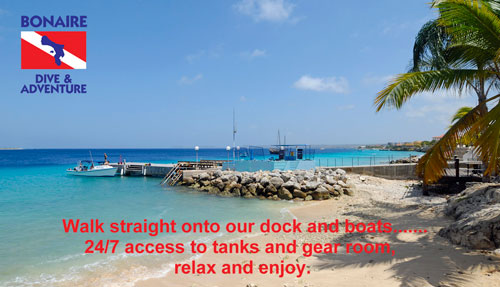
Bonaire Dive and Adventure is located in the Den Laman building with the dive pier and boat launch area all within a few feet of each other.
As with all operations in Bonaire before you dive you must attend a dive briefing and purchase your reef tag which gives you the Ok to dive anywhere in the marine park.  BDA also requires you to do your first dive from the pier so you can check weighting for proper buoyancy. Their boats are small and the staff will remind you many times that they don’t carry extra weight on the boat.
We got signed in at the shop with all the necessary forms and got our reef tags. Andre the owner took photo copies of my NAVED card since he had never seen one and wanted to show the staff in case they saw cards like it in the future….He was very interested in what we were doing and despite being very busy we talked a bit about vintage equipment diving. I did let him know that NAVED was a social club and not a certification agency.
Dive briefing began at 9:30….Don’t put on your wetsuit before the briefing and bring a cup of coffee or water as you are going to be there for a while……..He thoroughly covers the history of Bonaire, the dive sites, the rule etc etc. Also included is a talk by Jerry Ligon on the guided tours he offers to show you the fish and birds of the island.  
Next comes the walkthrough of the diving facility and where and how to get what you need. There is one area where you get your air or NITROX cylinders for diving around the island where you can back your truck right up.  Codes to get the keys after hours and which locker to put the cylinders in. Also how to use the O2 analyzer for the NITROX cylinders and how to log cylinders in and out. Sounds complicated but by day 2 it makes perfect sense.  
Next you walk through where you pick up weights and the large indoor area where you can rinse and hang your gear up to dry overnight. The room is very well laid out with sturdy racks and lots of hangers.  The main door to the room is locked at night but you can access it by using a community key kept in a lock box similar to one used by a realtor for a house.
At the dock entrance which is locked at night but once again if you are diving with them you will have access to a key that lets you on the dock 24/7 so you can dive anytime you want to.  There are another set of lockers with both air and NITROX cylinders right at the dock and they can fill right there as well.  No need to store cylinders in your room for night dives as you can get them on the dock anytime. I never saw a shortage of cylinders on the dock no matter what time we went diving.  It’s a very slick setup and minimizes carrying cylinders around all over the place.
There are long wood benches on the dock with upright boxes to secure your cylinder bottom and plenty of room to put your gear together. Take a giant stride off the end or go down the wide ladder and you are in the water. BDA staff was around helping divers with their gear and providing extra weights or assistance while divers were trying out their gear in the shallow water around the dock.
While Rob and I were assembling our gear we talked with Andre for a while about the Argonaut Kraken and how it all came about and how and why we use them.  He asked lots of questions and had absolutely no reservations about us diving with them.
NOTE….I have read on SB in many threads that Andre was not nice to deal with and various other complaints about him. During the entire time we were there he was the perfect host. He was always available and very involved in the daily operation and made us feel welcome and appreciated.  I talked with him about this and he says the complaints come from people using his dock and pier who are not registered guest of the resort or BDA.  I completely understand his point and would feel the same way…..
NOTE….. Just to the right of our room at Den Leman is a HUGE open lot with free parking and full access to Bari Reef. So there is no need use BDA facilities without paying unless you are trying to grab cylinders for free or are up to something else.


Diving Bari reef is about as easy as it gets. We dove in various spots from BDA south to Divi Flamingo Beach and Casino and all was about the same. From the shore to about 20’ is sand and spots of coral and from there the norm is a gradual slope down to about 100’ where it turns back into sand again.  Some places look more like a wall than a gentle slope but all are easily manageable. Most days there was some very slight alongshore current but nothing of any concern. Always easier to go against the current and coast home than vice versa.
The reef was in good shape and very active with all the tropical fish you could want to look at. Since the current is minimal it’s easy to stop and explore all the cracks and crevices where the little ones hide. A few eels and lobsters but mostly reef fish. Nothing pelagic at all save a small barracuda or two and the largest fish we ever saw here were Tarpon who were by Florida standards about bait size. Most fish hung out between 30 and 60’ in this area and as you went deeper there were fewer fish.
One of my favorite things about diving this stretch of reef is all the rubble and junk that was left over from hurricanes. There are plenty of things to explore and even a couple of small boats along this stretch. An upside down tugboat around 100’ was neat to visit but the Jewfish that supposedly lived there must have gone further south for the winter as we never saw him.  Off of Divi Flamingo there is a big aluminum fishing boat and a HUGE anchor with monument to someone who’s name escapes me.


After we did our checkout / orientation dive most of the morning was gone and Rob and I headed out in the truck to 1000 Steps.
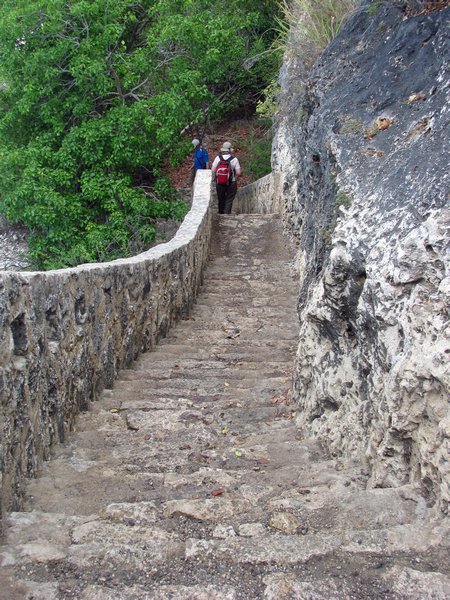
steps-bonaire-bonaire.jpg
1000_Steps_Bonaire-0.jpg
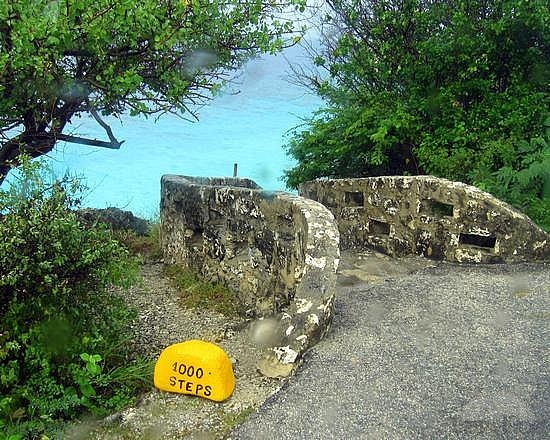
I would agree with others that this is a must do dive while on Bonaire. There really are not 1000 steps only about 70 I think and going down them is no problem. Coming back up after a long dive with wet gear feels like 100000000 steps.  I had to stop ½ way up for a rest.
The shore entry is a little challenging as you go from rocky beach to a berm of broken up coral to water and then another berm that is covered in mini sea urchins…..Walk up or down a bit and look for a sand channel going out which is much easier. Surf was not an issue but getting out was a bit harder than going in due to surge.
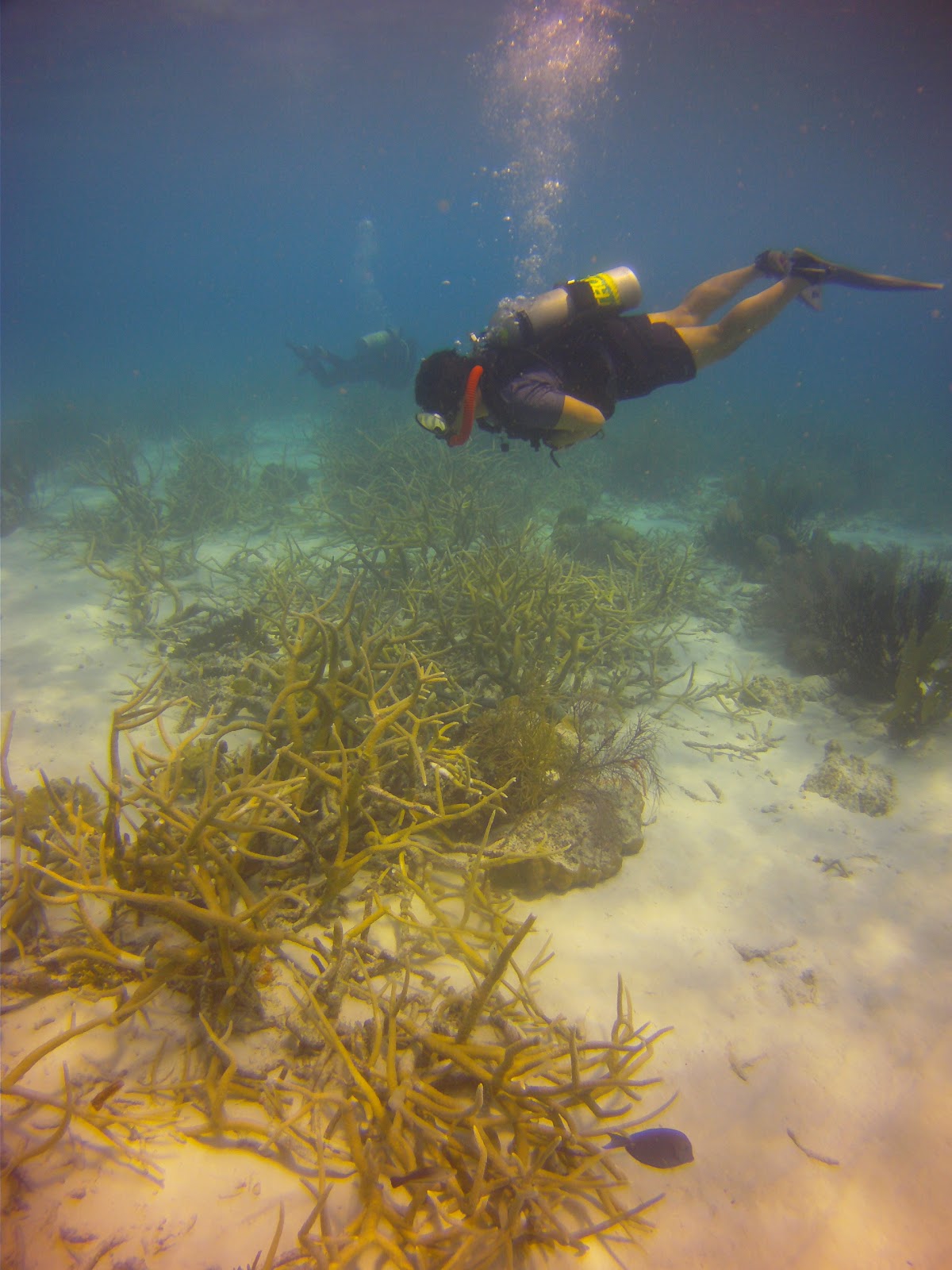
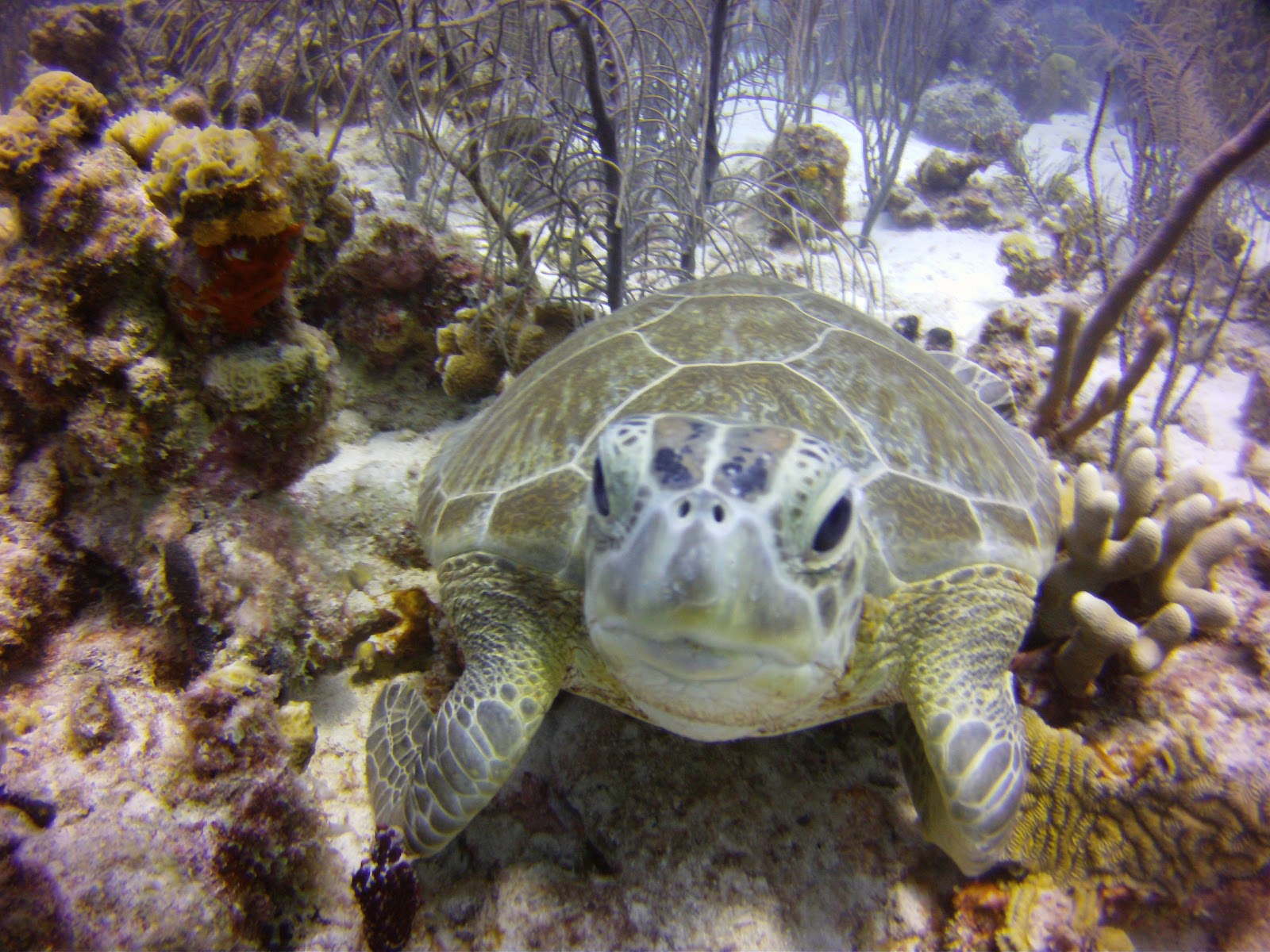
This area of the reef was even more active than Bari reef for fish and more varied species.  In the shallows we saw turtles several times and they were not in a big hurry to get away.  This is also a place to see some amazing stretches of staghorn coral. We spent a lot of time hovering over the coral checking out all the things swimming in and out of it.  
AMBA0196.JPG
AMBA0085 (2).JPG


After an exhausting climb back up Mt.Everest, a.ka. 1000 steps we met up with some divers in the truck next to us from the NE who were amazed by the Argonauts.  We shared all we could while we caught our breath and drove on back to Den Laman.  THOSE RED HOSES DRAW A CROWD!


For our evening jaunt we went downtown by the cruise ship dock and it was later in the evening so we counted on the ship being ready to disembark so all the folks would be back on board.  The streets were pretty quiet and we walked up on The Divers Diner  and figured this was definitely the place for us!20150208_184356.jpg
There were only three tables occupied when the 4 of us seated ourselves. Perhaps I missed a sign on the way in that might have read….For Service Please Set Off An Explosive Device because that’s about what it took for someone to come over and ask us what we wanted.  We were able to get 3 waters and a Coke Light.  Refills would be difficult to obtain no matter what we did.  We were starving as we had skipped lunch and ordered some fries with cheese and jalapenos to share while we looked over the menu for entrees.  After an exceedingly long time we were able to place our order but from the start things were missing…..Like Thank You or can I get you a refill…..Would you like silverware….How would you like that cooked….Instead we got staring off into space waiting for us to ask and answer our own questions…...My wife, Rob and I have spent decades in the service industry and know what good and bad service are….We are also exceedingly patient because it’s a tough job for anyone to do….I am also an extremely generous tipper…..
We finally got the entrees and disappointed would be a nice word to describe them…...I won’t bore you with hundreds of food network adjectives or other boring stuff.  Service after we were served did not exist and at one point I considered going to the bar to ask for more napkins….We ate very little and decided that the fries we had at first were the best part of the meal.  Surprisingly while we were sitting around talking the person who cleared the table was very polite, smiling and nice.  This was a first for us at The Divers Diner.
I would put the cuisine below bar food and slightly above after midnight convenience store roticerry hot dogs and frozen burritos.  Our bill of course was closer to Mortons Steak House than McDonalds where it should have been.  If you enjoy being hungry after a meal and feeling like you are not wanted then this is the place for you.


We continued walking around for a while and started encountering a lot of signs on buildings in various languages….The ones in English told of some serious political issues the locals seem to be having with the Dutch government and the overall feel of that area led me to believe that we should do an about face and go back from where we came from.  I don’t discuss religion or politics on VDH so I won’t start here but after researching it a bit I was not surprised by the grievances especially given the attitudes we felt towards us by most of the local population.

We ended the day back at Den Laman on our awesome patio for some mosquito bites and some great Dutch chocolate before retiring for the evening.  

Wednesday, February 18, 2015

Bonaire Trip

Bonaire trip February 7th to 14th

Once again I’m not a writer or professional trip reviewer.  I call it like I see it plain and simple.  Those who have been may agree or disagree with me and that’s fine. Those who have not been yet may find some of this helpful in their travel planning.
I have been on more dive trips than I can remember both in and out of the country but the last time I was in Bonaire was 87 so it was like starting with a blank slate there again.


The 4 of us flew from Tampa to Atlanta to Bonaire.  Flights were uneventful and running on time so nothing of note to report there.  Getting off the plane in Bonaire is via ramp as they have no terminals with skyways.  Customs is right at the front door with one line for residents and one line for all others. Customs is more of a formality than a necessity as all they do is say Hi, welcome to Bonaire and stamp your passport.  If you were in the back of the plane and get in the back of the line for customs it may be a challenge to find a luggage cart that is necessary since you have to walk a little ways across the lot to pick up your rental truck. No one will volunteer to tell you that you can go get your truck and drive back up to the terminal for free but it is possible...If you are getting a shuttle or taxi you just walk out to the curb.
Despite E-mailing copies of our drivers licenses and filling out the paperwork in triplicate ahead of time for Avis as we were advised to by the person at our hotel to do they still had no idea who we were and knew nothing about the paperwork we sent ahead to them which was supposed to expedite the rental process….So we had to start again at.. Hello, I want to rent a truck…..
We took a few wrong turns getting to our hotel as it seems road signs are both unnecessary to replace when damaged or missing or to actually coordinate them with the map you don’t get at the Avis counter. I also found it strange that most signs are only marked on one side so unless you are going that direction you have to look in the mirror or have someone read it to you after you pass it.
We stayed at Den Leman Condominiums  we chose the Blue Marlin Room which is the only Two Bedroom Seaside deluxe room in the complex. More expensive yes but the awesome factor was well worth it.  
Den Leman.JPG
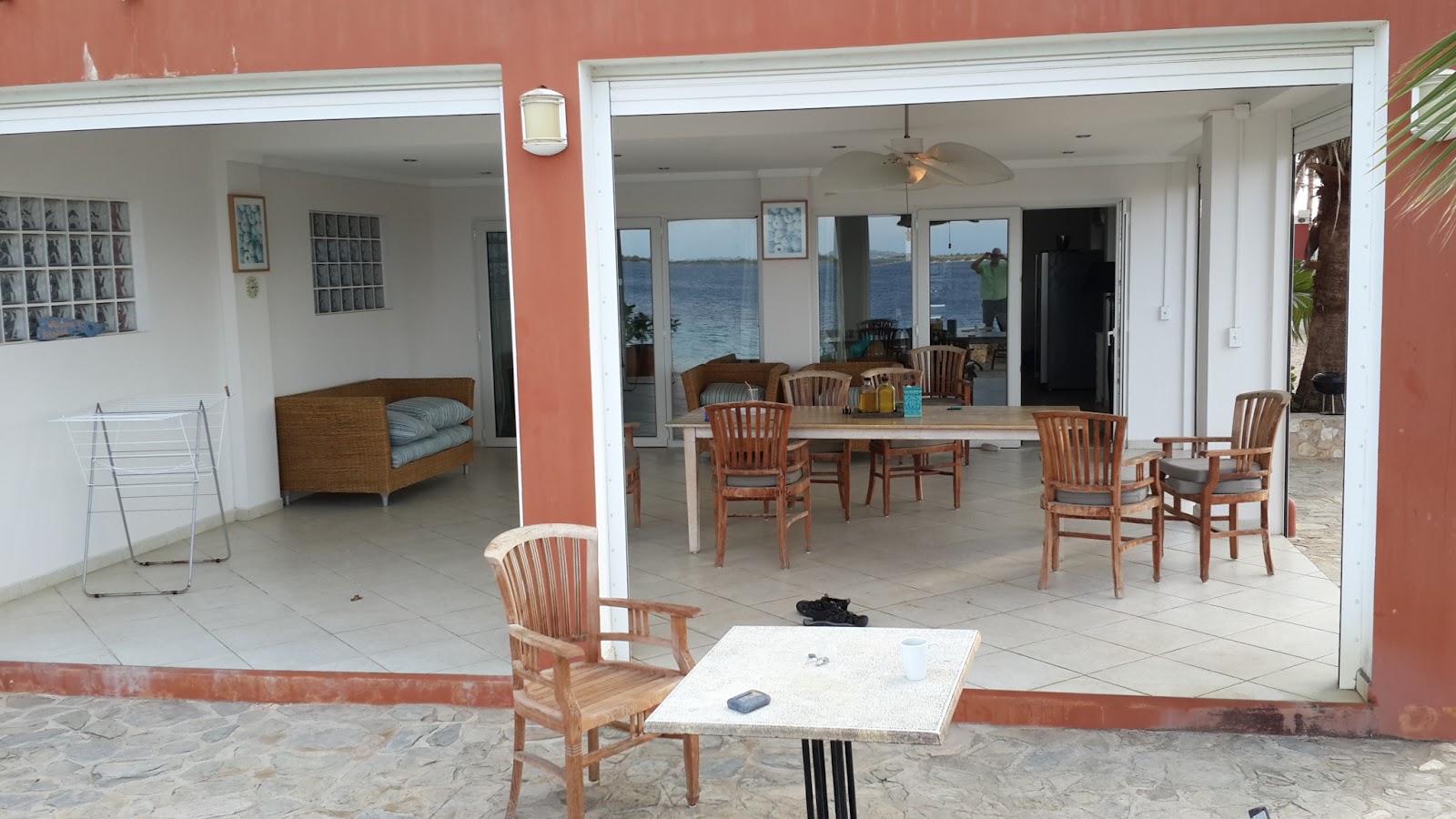
The room has a patio with 4 roll up doors and about 10 steps from its own beach and about 50 steps from the dive dock.(room is lower far right in the picture above)  The only improvement they could make to it would be screens to keep out the mosquitoes which were extremely bad dusk and dawn while we were there. The full kitchen allowed us to cook meals (more of why we did that later) full sized refrigerator was great for ice and keeping it stocked with lots of water and snacks.
20150214_080542.jpg
Couple of minor problems while we were there but they were handled right away by the ladies in the office. Everyone at Den Leman was very pleasant and helpful. As long as I could have this room I would stay here again for sure.
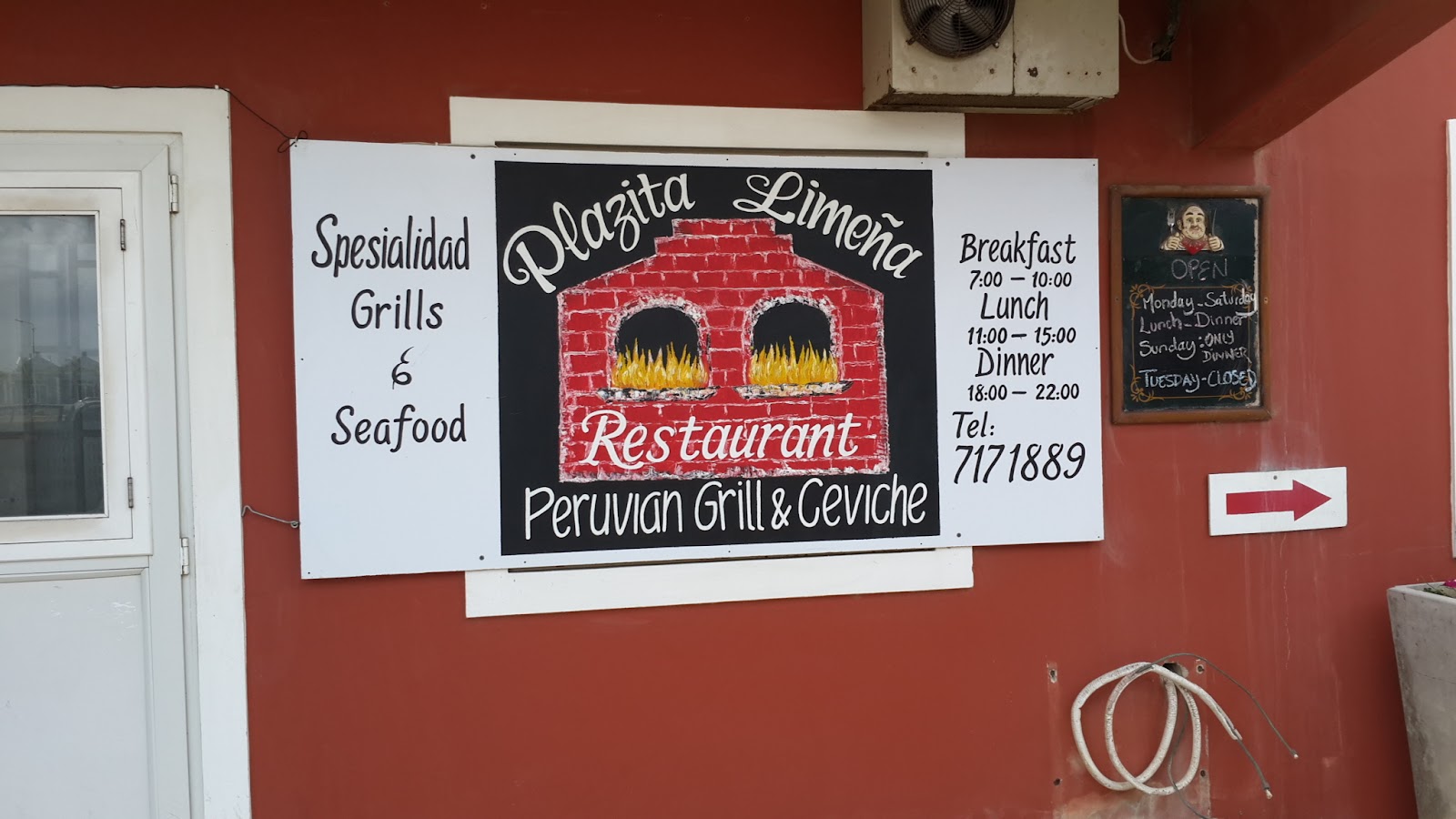
Adjacent to our room between us and the dive dock is the  Plazita Limena restaurant which specializes in Peruvian cuisine although from 1st glance I would have figured they had wood fired pizza but not so much.  20150214_105209.jpg We ate here our 1st night since it was right next door and three of the four of us like to try new things especially food.
The service was good and the people were all pleasant.  A few language stumbles but between Spanish,English and some pointing we got most everything we needed.  Overall we thought the food was Ok but not remarkable at all for the price.  As hard as I tried in both languages I could not get the point across that I wanted my entree SPICY and I’m used to ordering spicy food in many languages but here it was to no avail. I even asked for hot sauce in a bottle which is a foreign concept in all restaurants in Bonaire as I found out as the week progressed. No matter how I asked for it, it was if I was asking for moon rocks or an autographed picture of Burt Reynolds to be placed in the chair beside me...    Also the fact that we would like to have a pitcher of ice water on the table was a tough concept.  When you are trying to hydrate in a desert climate 8 ounce glasses don’t go very far and it would have saved them a lot of trips to the table.
As they were our next door neighbor the girls went back and forth buying colorful cocktails in tall glasses with fruit and umbrellas. Nice folks and I’d recommend you stop in and see them.

Next part of the adventure on our 1st day was to locate a supermarket.  We drove around the roundabouts more than a few times and ended up looking like the UK scene from European Family Vacation.  Finally we found  Van der Tweel Supermarket  which is supposed to be the largest one on the island.  Shopping in grocery stores in foreign countries is always an adventure and I really enjoy looking around at the different items people from other countries eat. This store proved to be a cornucopia of new products and I could have spent hours walking up and down the aisles trying to figure out what things were since most of the packaging was labeled in Dutch.  
After putting a quarter in a slot on the shopping cart handle it released it’s locking device from the one in front of it and we were off… US currency is used on the island so prices were easy to read but hard to believe on most items.  We had to stock up on some sundry items and snacks for the week but really didn’t want to take out a loan to buy them!  I was able to procure some unique cup o noodles which were awesome because they contained a collapsable fork inside so they were completely portable and borderline tactical. Everyone was really happy with the selection of chocolates as well. Be prepared for sticker shock when you visit. I’m sure most of the locals don’t shop here and on our next visit I’ll be shopping where they do.

That about wraps up day one…….Tomorrow it’s on to the diving we hope.

Friday, February 6, 2015

What Double Hose Regulator Should I Buy?


This is probably the question I get most often and the one with no easy answer.  I guess my first response would be...Don’t buy the first one you see.
Buying your first double hose is just like buying anything else for the first time and if you are smart you will do your research first.  If instant gratification is all you require then I’ll be glad to equip you with the newest and best double hose setup made to date and you can go diving.
Rarely do double hose divers just have one regulator and I hope by providing information over the next few weeks you will be able to make a more educated buying decision.  The information I’ll be sharing is not intended to be a history or historical timeline of regulators.  Phil Nuytten, Ed LaRochell and several other much more qualified than I are the best resources for that kind of information.  
Since double hose regulators have been available since the early 50’s there are quite a few to choose from. 
Note:  Just because it’s old does not make it good or bad...Nor does it make it valuable or rare.

If you are a collector then you will want one of everything and every model. The same applies if you only collect trophy shelf queens (regulators you polish and talk about but never use).  If you are looking for a regulator to dive with then the field narrows down very quickly.

The two key players in the double hose world were always US Divers and Voit here in the US. They made millions of regulators and many of the parts used on the first models were still used in the last ones.  The advantage here is that most parts are still available as NOS or have been reproduced and in many cases improved. La Spirotechnique in France (parent company to USD) also made millions of regulators whose parts were virtually unchanged through their years of production.
While you are perusing the internet and other places you will no doubt run across manufactures such as DACOR, Healthways, Sportsways and Nemrod just to name a few.  Parts may or may not be available and if they are they may be difficult to acquire. Some models were made in very limited numbers and some were just bad breathing regulators when they were new.  Some of the hard-core double hosers enjoy a challenge and have taken these brands and made some really good diving regulators out of them. But when looking for your first double hose I would not recommend them.
I hope you still have your wallet safely in your pocket.. Next you need to decide what type of diving you are going to do with you double hose.  Are you interested in historical correctness, down to the period correct dust cap on your 1st stage and the fillister head screws on your mouthpiece clamps? Are you a devil may care, mix and match modern and vintage gear, go with the flow diver? Do you dive mainly in cold water in a dry suit or dive only in the tropics in just your swimsuit?  None of these have to be set in stone as double hose regulators are very flexible but it’s easier to decide on gear if you know your diving style to begin with.  
Once you decide on what regulator you want your search can begin. You can buy from established online websites, E-bay, Craig’s List, or local contacts to name a few.  Don’t get caught up in a rush to buy or the euphoria of winning an auction.  You will likely end up paying too much for too little and still need to spend quite a bit to get your regulator into diving condition.  Research past auctions and sales on the web and watch the message forums for regulators that pop up for sale.
Once again 90% of the regulators you would use for diving are neither rare nor hard to come by and you are more than likely going to own more than one in a short period of time.
I do offer refurbished regulators on VDH that are of a grade to which I can guarantee.  They don’t last long on the site and I don’t do many at a time.
Once that you have your twin hose jewel, you will most likely need to get it serviced.  Most regulators are more than 50 years old and are in need of a complete service.  This is not an area to shortcut or to try to shave off a few bucks.
Get your new to you regulator in the absolute best condition you can to start with, maintain it properly and it will give you years of trouble free diving.
Unless you buy your regulator from someone willing to guarantee it to be in excellent working condition and can provide proof of service with a warranty you are on your own!  Buyer Beware.
Many people choose to rebuild their regulators themselves and all the factory service manuals are in the download section of the website, parts are available on line and the website forum has an extensive database and search engine to return answers to most every question you could ever ask about servicing a double hose regulator. If you have experience servicing regulators or are simply good with mechanics then there is no reason you can’t do it yourself.  I would strongly suggest if this is your 1st regulator you service and you foresee yourself doing a lot of it in the future then you should definitely pick up a copy of Regulator Savvy  It will help you understand WHY and HOW a regulator does what it does.
Rebuilding a regulator does not mean taking out all the parts, flipping over seats, greasing up old parts, re-installing them and calling it rebuilt...This is a scam and fraud in my opinion. NEW reproduction parts for these regulators have been available for more that 10 years now. Unless you get your old parts back with your just rebuilt regulator you got the shaft.

I am not saying by any stretch that VDH is the only place that can rebuild a regulator; far from it.  I have dozens of peers in the community that I would trust with my personal gear. I also know a few that, as well meaning as they might be, I wouldn't trust to put my regulator on a cylinder valve correctly.
If you hear, Oh I know how to service Brand X and these simple old things are beneath my regulator service god’s skills. Walk away….Just let it go….Simple they may be, but double hose regulators like all other mechanical items have subtle nuances and a knowledgeable person who understands this will get it right the 1st time.

Next we start talking what’s what about actual regulators.

I appreciate your comments and feedback.

Thursday, January 29, 2015

Getting Started in Vintage Equipment Diving

Getting Started in Vintage Equipment Diving


Areas highlighted in BLUE are links..Please click on them


Please read carefully…..Over the years VDH associates have been guiding divers in this area and by following this outline it will save you a lot of grief and speed up your evolution into Mike Nelson.


First things first…..DO NOT GO OUT AND BUY A BUNCH OF OLD GEAR! Biggest mistake you can make.  There is nothing on the internet or an auction site that you would actually dive with that cannot be found year round and in several places.
Ok, now that you have put your wallet away you need to set down and think long and hard about yourself as a diver. Ignore your ego and look deep.
When was the last time you went diving?  Has it been years or weeks? If it has been a very long time I would suggest taking a refresher course or at the very least taking the gear you have and doing some pool work and some re-reading of SCUBA BASICS.  If you are not proficient and comfortable with the gear you originally learned to dive with, then Vintage Equipment will not solve that!
More than once I have witnessed a diver, new to the group, joining us for an event decked out head to toe with amazing vintage gear. But from the moment they start assembling and putting on this equipment, they are struggling. Once they get in the water they struggle even more and after a brief uncomfortable and non-enjoyable dive they end up thinking...What the hell did I get myself into this for?... It’s because they did not take the time to insure that their basic diving skills were up to par.

.If you can’t be honest with yourself at this point and do what is necessary to get yourself to Basic Competent and Safe Diver level, don’t go diving! (Take up golf!!) You could harm yourself or worse, another diver.

With that said and moving on…..The skill that many divers going vintage struggle with most is diving without a BCD.  Some were never taught basic weighting skills to begin with.  Take your gear to the pool, and some extra weights as well.
Once you are in the water get all the air out of your BCD….ALL OF IT.. Get comfortable in your gear and relax. You are going to work on obtaining NeutralBuoyancy.
With your lungs full of air you should be able to float on the surface comfortably with your head out of the water.  As you exhale slowly you should notice you start to sink slightly. Not like a rock but your body will start to slowly sink under. You will need to add or remove weight till you get this part right. FORGET YOU HAVE A BCD ON.
Once you have accomplished this at the surface you will find that you will have to swim down the first 10 or 15 feet but then you are close to neutral for the remainder of your dive.

Next obtain Neutral Buoyancy with only your snorkeling gear and wetsuit on. When comfortable practice doing  Kelp / Pike dive or Head-first surface dive.  You may need to use your arms to pull yourself lower until your fins get under but it’s practice that makes it perfect here. You are getting used to descending without being pulled down by excess weight for which you compensate with a BCD.  In the future you will ditch your BCD all together and dive like a Manfish. Neutral buoyancy with your wetsuit and snorkeling gear will be very close to neutral when you put on minimal vintage gear and only minor adjustments to perfect your weight should be needed. 


Another good exercise is Ditch and Don...You may ask yourself why in the world would I take off my gear underwater?…...You may never need to do it but it is a great confidence builder and for decades was a requirement for passing all scuba courses. Give it a try; it’s more difficult than you might think especially wearing a wetsuit.
A pool or other shallow confined water spots are good places to task load and challenge your skills. Look at some of the diving manuals of the past and concentrate on the basics, mask removal and clearing, or swimming without a mask. There are dozens of skills you can and should practice that will elevate your comfort and confidence level and get you ready to move on. Spend time getting to the core diver in you. Practice what you are not comfortable with until you are. Doing this will make your transition into the Vintage Equipment Diver world much easier, more comfortable, and safer.   


Photos courtesy of 1976 Jeppesen Sport Diver Manual.  Great resource material for double hose divers.  I have a few copies available on VDH CLICK HERE


Next up...........What Double Hose should I buy?

Sunday, January 25, 2015

New ideas for the blog

Right off the bat lets establish what’s what about this blog…..

  1. I’m not a writer….I don’t play one on the internet.  Much of what you see in on these pages will be the OPINION of myself and others.  There will be a lot of factual information but I won't let that cloud up the fun and entertaining stuff.
  2. I am not an expert…..I don't play one on the internet. I try to share my experiences and observations in hope that you will learn or at least laugh at them.
  3. This blog site is available to EVERYONE.  I hope I get a gazillion Emails from folks wanting to contribute to the blog in the form of articles, opinion, previous experience etc. NO ONE will critique your writing style or content...With that being said, I am not going to publish your thoughts on politics, religion, bird migration, My Little Pony etc….If it’s about Diving and specifically double hose diving then send it on in...I expect all of you to contribute so it will be successful and something people look forward to reading. Listening to my boring nonsense gets old pretty quick!
  4. Technical details and discussions belong on the VDH Website Forum where people can ask questions and learn things.  Social Media in general is good for pictures, brief comments and a place people act like idiots….Blogs are places to share more lengthy stories or events that don’t really need discussion. If a topic gets a lot of responses we can move it to a forum post and talk about it at length.   I think you will get the idea as we go along.
  5. Help is available if you need it.   Just ask me and I’ll do what I can or find someone who can answer your questions.

If you would like to share an article here please contact me by E-mail

Friday, January 9, 2015

Why vintage equipment in scuba diving anyway?

One of the things that many of us run into when we dive vintage equipment is a rather simple sounding question:

What is the appeal?

On the VDH forum this very question invokes passionate responses. I would like to humbly provide my personal reasons for why I enjoy diving vintage equipment, and for what specifically got me into diving old scuba gear.

For me, diving vintage scuba gear started out with a simple idea. I wanted to learn how to service a scuba regulator. It couldn't be that hard, right? As it turns out, it really isn't if you have some mechanical aptitude and some basic academic knowledge. I began servicing my Aqualung Conshelf XIV regulator set, which was fun, simple, and a great confidence builder. No longer was I beholden to the dive shop for getting my regulator set serviced. One day, while I was looking around on Ebay for another used Conshelf regulator, I stumbled across the Aqualung Conshelf VI. This was the first regulator of the Conshelf line, manufactured and released by Aqualung in 1965. I simply couldn't believe that it was only 30 dollars for a complete first and second stage. It seemed like a real piece of history. Heck, it pre-dated the personal computer. I purchased it, bound and determined to see what made old regulators tick on the inside.

Remarkably, a Conshelf VI from 1965 is almost identical to a Conshelf XIV from 2010 on the inside. You can literally use the same parts kit for a modern regulator to rebuild the first stage of a conshelf made in 1965. For me, the voodoo was gone. After purchasing a copy of Regulator Savvy, and learning a little bit more about what made most regulators tick, I realized that regulators in general are not particularly difficult to service with the right tools and a little patience. It made me wonder if I could realize value in other components of my diving. I had a mint condition regulator, freshly serviced, and I had invested maybe 50 dollars total. Could I extend this to other areas of my diving? At the time, I was in graduate school and money was a real issue. I wanted to dive, but I wanted enough ramen to last until payday as well. I realized that since older dive gear is junk to some people, that I could acquire it rather cheap...and sometimes for free.

This lead me into examining the scuba gear of the 1960's in its totality. This also lead me to the important realization that while masks, fins, booties, wet suits, knives, and other gear looked similar to what I had seen in dive shops that people did not wear buoyancy compensators in the old days. How was that even possible? My instructor said that a BCD was "life support equipment." If that was the case, then how was everyone, children included, diving without one for the first 30 years of the history of sport diving?

This lead me to assemble a complete representative set of 1960's dive gear, and to resolve to learn how to use it. To make a long story slightly shorter, after a bunch of reading, some mentoring, and a little practice, I too was flying through the water like Jacques Cousteau did on TV. I realized that, for me, diving is a heck of a lot more fun when you do it with less gear. My wife, minimalist that she is, also really loved diving with less gear as well. We began to dive vintage equipment whenever we could, because it was really fun. It has that sense of adventure to it that is lost in an era where people will carry your equipment up a mountain for you, and four dollar coffee is on every corner.

Why dive vintage scuba equipment?

-It is a way to save money
-It is a piece of diving history
-It looks really cool
-You can learn to maintain your own gear
-It is really fun, and feels like an adventure


Stay tuned to the Argonaut Blogspot, as we continue to talk about vintage equipment diving. Don't forget to visit Vintage Double Hose, where we continue to maintain and advance the sport of vintage equipment diving. We are the makers of the Argonaut Kraken, the world's first modern production double hose scuba regulator!

The Latest from the Argonaut Kraken Dev Team

As Vintage Double Hose continues to grow, we plan on using our Argonaut Kraken blog as a sounding board for new ideas, new modifications, and new ways to advance the sport of vintage equipment diving. Please continue to follow our blog, which is now linked to our new VDH Google+ business account, to keep up with the newest ideas in vintage equipment diving as we wargame them around the shop.